

11 tips for better sleep that really make a difference!
February 28, 2025
Full Spectrum CBD Oil and Epilepsy: Clear Information
September 4, 2025
You've heard ofCBG oil, you're looking for an effective, high-quality product, but you're feeling a little lost when faced with the variety of products on offer? No wonder: CBG (Cannabigerol), a cannabinoid that is still little known to the general public, is attracting growing interest for its anti-inflammatory, neuroprotective and regulatory effects.
But not all CBG oils are created equal. Origin, composition, concentration, carrier oil... there are many criteria to watch out for if you want to find a quality product that's good for you and, above all, effective.
This guide aims to help you understand the essential quality criteria for CBG oil, so that you can evaluate and compare products with discernment, while remembering that it is in no way a substitute for the advice of a healthcare professional.
💡Quick answer:
When choosing a high-quality CBG oil, don't just rely on the price or the percentage displayed on the label. A good oil can be recognized above all by its transparency, composition, and traceability.
Before buying, check these 6 essential criteria:
1️⃣ The type of CBG extract used : isolate, broad spectrum or full spectrum (this point greatly influences the richness of the product).
2️⃣ The origin of hemp and the place of manufacture (ideally in France or Europe, with strict standards).
3️⃣ The presence of an independent certificate of analysis (COA) carried out by a third-party laboratory, clearly indicating the CBG and CBD levels and THC compliance, with a batch number on the bottle!
4️⃣ The actual concentration of CBG per drop, as "10%" can be misleading if the dosage is not clearly explained. Some brands advertise 20% CBG oil when it actually contains only 10% CBG and the rest is other cannabinoids...
5️⃣ The carrier oil used (MCT, hemp, olive, etc.), which plays an important role in tolerance and absorption.
6️⃣ The absence of contaminants : pesticides, heavy metals, residual solvents, or impurities (a crucial point in a market where quality is still uneven).
A reputable CBG oil should be a clear, controlled, and consistent product with a comprehensible composition and accessible analyses. The best choice is therefore the one that meets your needs while guaranteeing impeccable quality.
A simple tip to avoid poor-quality products: ask for the batch number and corresponding analysis of the product you wish to order 😉
💡Detailed answer:
CBG oil is becoming one of the most sought-after products inthe wellness hemp industry. And it's no coincidence: CBG (cannabigerol) is a natural cannabinoid found in the plant, even less well known than CBD, but increasingly studied and appreciated by consumers for its potential properties.
The problem is that when you start looking for CBG oil online, you quickly come across dozens of brands... with similar promises, similar-looking bottles, and percentages that are sometimes difficult to compare.
As a result, many people buy CBG oil somewhat randomly, thinking that a high concentration or attractive packaging is enough to guarantee quality. However, in reality, two CBG oils labeled as "10%" can be very different: the quality of the extract, the presence of other cannabinoids, the carrier oil, purity, analysis... everything counts.
And in a market that is still young, where quality varies greatly from one manufacturer to another, knowing how to read between the lines is essential.
In this guide, we will therefore answer a simple but crucial question:
How to choose a high-quality CBG oil that suits your needs and complies with safety standards?
The goal here is not to sell you a product at any cost, but to give you clear, concrete, and verifiable criteria for recognizing a reputable oil and avoiding the most common pitfalls.
In particular, you will learn to understand:
Summary of our guide to important criteria for CBG oils
🌿 What is CBG oil?
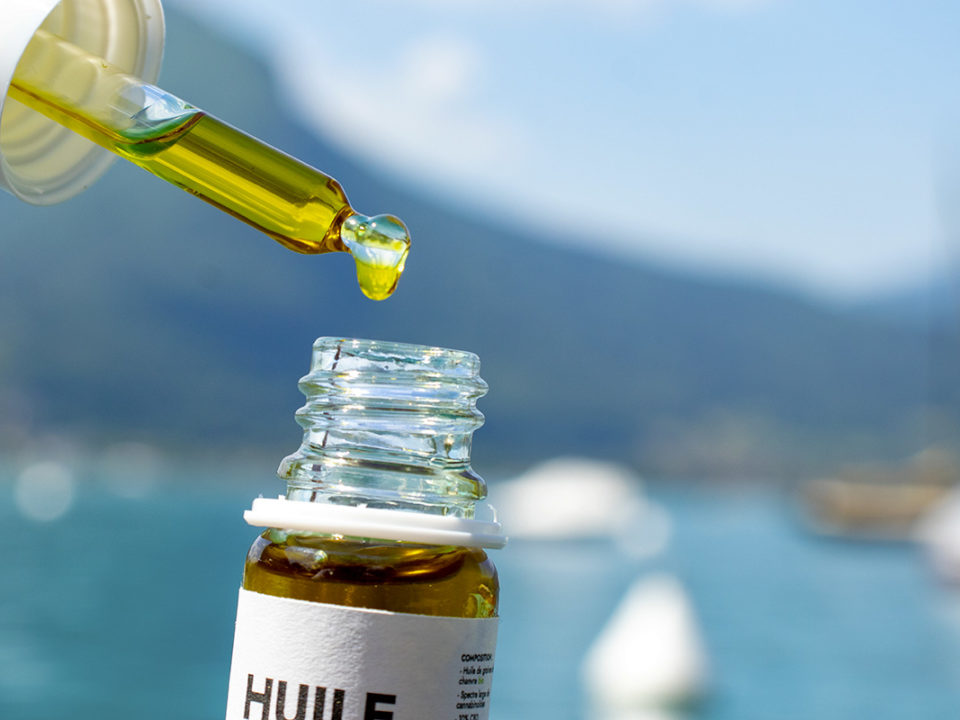
CBG oil is a product obtained by combining a hemp extract rich in CBG (cannabigerol) with a carrier vegetable oil.
Unlike traditional edible oils (such as olive oil), CBG oil is not directly "pressed" from the plant. CBG is first extracted from hemp, then incorporated into a carrier oil for ease of use and optimal absorption.
CBG, or cannabigerol, is a cannabinoid naturally present in the hemp plant. It is often referred to as the "mother molecule" because, in the fresh plant, it plays a key role in the formation of other cannabinoids such as CBD and THC.
Today, CBG is used in wellness practices, often as a complement or alternative to CBD. It is attracting attention for its distinct profile and its interaction with the endocannabinoid system, a biological system involved in regulating many internal balances.
What are the potential effects of CBG?
CBG does not cause any psychotropic effects. It is being studied for its interactions with various receptors in the body.
Even though scientific research continues to evolve, CBG is generally sought after by consumers who want to:
🌿 promote a feeling of physical and muscular relaxation
🌿 Limitinflammation
🌿 support their emotional balance
🌿 Support a feeling of digestive comfort
🌿 Complete a wellness routine focused on recovery or concentration
It is important to note that CBG oil is not a substitute for medical treatment and is intended solely to promote comfort and overall well-being.
Why is CBG rarer than CBD?
In mature hemp plants, CBG is naturally present in very small quantities (often less than 1%). This makes its extraction more complex and explains why CBG oils are generally more expensive than CBD oils.
Certain specific varieties of hemp are now cultivated to obtain a higher concentration of CBG, but production remains more technical and demanding.
1️⃣ Isolate, Broad Spectrum, or Full Spectrum: Which type of CBG oil should you choose?
When comparing different CBG oils, you will often see terms such as isolate, broad spectrum, or full spectrum.
These terms are not marketing jargon: they describe the type of extract used. And this choice directly influences the final composition of the product, its quality, and its effect.
Understanding this difference is essential to making an informed choice.
CBG oil based on isolate
A CBG isolate is a purified form of the cannabinoid. CBG is extracted and then isolated almost completely from the other molecules present in the plant.
An oil formulated with an isolate therefore contains:
✅ CBG only
❌ no trace of THC
❌ No other cannabinoids
❌ No natural terpenes
This type of oil may be suitable for people looking for a simple formula without other hemp-derived compounds.
However, it does not benefit from what is known asthe entourage effect, i.e., the natural interaction between several cannabinoids and terpenes present together in the plant.
Broad Spectrum CBG Oil
A broad spectrum oil mainly contains CBG, but also other cannabinoids naturally present in hemp, such as CBD, CBC, and CBN.
However, it does not contain THC (or only trace amounts that are undetectable according to current standards).
In summary:
✅ CBG only
❌ no trace of THC
✅ presence of other cannabinoids
✅ presence of natural terpenes
This type of formula preserves some of the plant's natural richness while avoiding any measurable presence of THC.
This is often a good compromise for those who want a more complete composition than an isolate.
Full Spectrum CBG Oil
Full spectrum oil is made from a complete extract of hemp. It contains:
✅ CBG
✅ other naturally occurring cannabinoids
✅ terpenes
✅ flavonoids
✅ and regulatory traces of THC (in accordance with current legislation)
The advantage of a full spectrum formula lies in the diversity of naturally associated compounds. This combination is often sought after for its more comprehensive approach.
💡 So, what type of CBG oil should you choose?
There is no universal solution, but in practice, not all formulations are equal in terms of richness and complexity.
An oil basedon CBG isolate contains only one purified molecule. This can be reassuring due to its simplicity, and it is often more affordable. However, this type of formula is botanically limited: it contains neither terpenes nor other cannabinoids naturally present in the plant.
However, many consumers today are looking for more comprehensive formulas that capitalize on the natural complementarity of hemp compounds—known as theentourage effect. Although this mechanism is still being studied, it is based on the idea that several plant molecules acting together offer a more coherent approach than an isolated compound.
Following this logic:
✅ Broad spectrum oil provides a richer cannabinoid profile while avoiding the measurable presence of THC.
✅ Full-spectrum oil retains all of the compounds naturally present in the extract, within the legal limits in force.
In practice, isolate-based oils may seem attractive because of their price, but they are sometimes perceived as more "flat" or less complete by users accustomed to richer extracts. This can lead to disappointment, not because the product is bad, but because it does not match the desired experience.
If the goal is to get closer to the plant's natural profile and benefit from a more advanced formulation, broad spectrum or full spectrum oils are generally a more consistent choice.
💡 In any case, transparency remains key: the brand must always provide an independent certificate of analysis, detailing the actual composition of the product.
3️⃣ Origin of hemp and place of manufacture: an often underestimated criterion
When you hold a bottleof CBG oil in your hands, you see a percentage, a promise, sometimes a flag. But what you don't see is the story of the plant.
And yet, it all starts there.
Hemp is not a synthetic molecule produced in a laboratory. It is a living plant, rooted in soil, exposed to the climate, and cultivated using agricultural practices of varying degrees of rigor. And like any plant, it absorbs what surrounds it.
Choosing a CBG oil therefore also means choosing the environment in which this plant was grown.
A regulatory framework that varies from country to country
In Europe, hemp cultivation is regulated, but the requirements can vary.
In France, for example, only certain varieties are authorized for cultivation. The THC content is strictly limited, and producers must comply with a defined agricultural framework. This creates a relatively structured environment for the industry and therefore safety for consumers.
In other countries, regulatory thresholds may differ—sometimes being more permissive—and controls may be less consistent. This does not mean that a foreign product is necessarily bad, but it does mean that even greater vigilance is required.
Traceability then becomes a key factor.
“French brand” does not always mean French manufacturing.
This is something that many people discover after the fact.
Some brands emphasize a "French" positioning, when in reality the product is:
❌ extracted abroad
❌ imported in bulk
❌ then simply bottled in France
It's not illegal. But it's not the same as a brand that truly controls its production chain.
The difference is simple:
✅ A manufacturing brand knows its raw materials, their extraction, batches, and yields.
❌ A repackaging brand depends on a supplier.
For consumers, this changes a lot in terms of consistency, quality control, and transparency.
Soil quality and agricultural practices
Hemp is often described as a "hardy" plant. This is true. But it also has a special characteristic: it easily absorbs elements present in its environment.
If the soil contains undesirable residues, the plant may absorb them.
If agricultural practices are intensive or poorly controlled, this can affect the quality of the final extract.
Conversely, a crop grown according to strict specifications, with regular checks, offers a more reassuring framework.
That is why origin should never be just a marketing argument. It must be documented.
Extraction and processing: the invisible but crucial step
After harvesting comes extraction. It is at this precise moment that the plant becomes a concentrated extract.
CO₂ extraction, ethanol extraction... each method has its own technical specificities. What really matters is not so much the method itself as how well it is mastered.
A poorly controlled process can alter the quality of the extract.
A rigorous process ensures a stable, clean, consistent profile.
Once again, only transparency can make a difference.
You will also find that by asking these questions, you will lose a number of sellers or brands that are simply assemblers of ingredients and have little knowledge of the origin of their products.
A laboratory that extracts hemp itself guarantees that the origin of each ingredient is known.
💡 In practice: how to avoid making mistakes?
Before choosing a CBG oil, ask yourself a few simple questions:
🌿 Isthe origin of the hemp clearly indicated?
🌿 Is the place of extraction or manufacture specified?
🌿 Do the analyses correspond to an identifiable batch?
🌿 Is the information accessible or does the provider make it available upon request?
🌿 A reputable brand has no need to conceal its processes.
She explains, she documents, she takes responsibility.
Behind a simple bottle lie agricultural, technical, and ethical choices. And it is these invisible choices that often make all the difference.
4️⃣ What concentration of CBG should you choose? (5%, 10%, 15%, 20%, etc.)
When looking at a CBG oil, the eye is naturally drawn to the percentage displayed on the label.
10%.
15%.
20%.
Instinctively, one might think that a higher rate means a "stronger" product, and therefore a more attractive one.
In reality, it's more nuanced than that.Concentration is not an indicator of absolute quality. It is a tool for adaptation.
💡 It is also important to bear in mind that some brands advertise a 20% CBG oil, when in fact this percentage actually corresponds to the total amount of cannabinoids present in the formula (CBG + CBD + CBN, for example).
In other words, pure CBG may represent a much smaller proportion than is suggested at first glance.
This is not necessarily problematic—a multi-cannabinoid formula may be appropriate—but it is essential to check whether the percentage stated refers only to CBG or to all cannabinoids combined.
A good indicator?
Check the details in milligrams on the label or consult the certificate of analysis, which specifies the exact concentration of each molecule. Better still, ask the salesperson—this will allow you to see if they know what they're talking about! Clear and detailed information is always a sign of professionalism.
Should you choose the highest concentration?
Not necessarily.
A high concentration allows you to:
✅ consume fewer drops
✅ adjust a precise dosage more easily
✅ reduce the amount ingested
✅ Reduce the financial cost of your treatment to the equivalent number of mg.
But it does not automatically make the product "better."
In a gradual approach, it is generally recommended to start with a moderate concentration and then adjust according to how you feel.
Each person reacts differently: Weight, individual sensitivity, cannabinoid tolerance, and the time of day when taken can all influence the experience.
Finding balance rather than aiming for the maximum
Choosing a CBG oil isn't about looking for the most impressive number. It's about finding the concentration that best suits your needs.
Too low a concentration may require a large number of drops. Too high a concentration may make adjustment more difficult for beginners.
The ideal solution is therefore one that is sufficiently concentrated to remain practical, but flexible enough to allow for gradual adjustment.
5️⃣ Which carrier oil should you use for your CBG oil?
First of all, CBG oil isn't like olive oil that's been pressed. As we said, it's a CBG extract (isolate or distillate) diluted in a carrier oil.
The choice of carrier oil is not insignificant: it's the one that transports CBG through the body, and influences its bioavailability - i.e. your body's ability to absorb it efficiently.
The main oils used :
MCT coconut oil (medium-chain triglycerides): highly prized for its rapid absorption, it promotes rapid assimilation by the liver. It is a technical choice, neutral in taste, often favored in "energy" or "targeted" formulations.
Hemp seed oil: offers greater synergy with CBG extract. Derived from the same plant, it naturally contains omegas 3 and 6, renowned for their beneficial effects on the heart, brain and immune system.
Olive, jojoba and sunflower oils: rarer, they are sometimes used for their sensory or nutritional profile, but their bioavailability is often inferior.
How to choose?
It all depends on your expectations:
If you are looking for an odorlessand discreet oil, MCT is a good choice.
If you prefer a fuller, more natural oil, with added nutritional benefits: opt for an organic hemp oil, like the one we use at Nobilis.
Our years of experience and feedback from our customers have shown us that for reasons ofeffectiveness, proximity to the plant's molecular baggage in the natural state (and therefore to the effects of the environment) and also ecology, by the way... We strongly recommend hemp seed oil (organic and French...) as a carrier oil.
6️⃣ Composition: CBG oil alone or combined with other cannabinoids?
When you see "CBG oil" on a bottle, you might think it's simply CBG diluted in oil.
In reality, the composition can be much richer—or, conversely, much simpler.
And this difference directly influences the experience.
CBG oil alone: the minimalist formula
Some oils contain only:
🌿 CBG
🌿 a carrier oil
It is a simple, clear, easy-to-understand formula. It may be suitable for people who want a targeted approach, without other cannabinoids.
However, as mentioned above, hemp naturally contains several active molecules that interact with each other. A formula containing only CBG therefore does not reflect the full complexity of the plant and its potential benefits.
CBG + CBD oil: a complementary combination
Many brands now offer oils that combine CBG and CBD.
Why is this association sought after?
🌿 Because these two cannabinoids have different profiles and can be seen as complementary in a wellness routine.
🌿 CBD is widely used to promote overall balance and relaxation.
🌿 CBG, on the other hand, is often described as more "structuring" or more "invigorating" in consumer feedback.
The combination of the two therefore allows for a more balanced approach, combining two distinct profiles within the same formula.
CBG + CBD + CBN oil: a more complete formula
Some oils go even further by also incorporating CBN.
CBN is a cannabinoid that occurs naturally in small amounts in the plant and is often associated with end-of-day routines or more soothing uses in user feedback.
A formula combining CBG, CBD, and CBN offers a broader profile, sought after by people who want a comprehensive approach.
It is not a question of saying that one formula is "better" than another, but simply of understanding that the composition influences the positioning of the product.
Broad Spectrum or Full Spectrum: overall consistency
When these combinations are incorporated into a broad spectrum or full spectrum formula, the result is closer to the plant's natural profile.
This can improve the consistency of the wording, while retaining:
✅ multiple cannabinoids
✅ certain natural terpenes
✅ a more comprehensive structure
Once again, the certificate of analysis remains the benchmark for verifying the authenticity of this composition.
How to choose the right composition?
In practice:
1️⃣ If you are looking for a simple formula → CBG alone (although not recommended)
2️⃣ If you want a more balanced approach → CBG + CBD
3️⃣ If you prefer a broader and more comprehensive formula → CBG + CBD + CBN
The most important thing is to choose a composition that is consistent with your objective, rather than being seduced by a simple marketing argument.
A well-formulated oil should be clear on:
✅ cannabinoids present
✅ their respective concentrations
✅ the type of spectrum
✅ and the corresponding analyses
🌿 Conclusion: choosing a CBG oil means choosing transparency above all else.
As you can see, CBG oil should not be chosen based solely on its percentage or attractive packaging.
In a market that is still young, where you can find both the best and the worst, the real difference often lies in the invisible details: the quality of the extract, the traceability of the hemp, the carrier oil, the consistency of the formulation... and above all, the brand's ability to prove what it claims.
Because ultimately, a good CBG oil isn't the one that promises the most. It's the one that is clear, controlled, and documented.
Before buying, always make a habit of checking:
1️⃣ the type of spectrum (broad spectrum or full spectrum preferred)
2️⃣ the presence of an independent certificate of analysis
3️⃣ The origin of the hemp and the reliability of the manufacturer
4️⃣ actual concentration
5️⃣ the carrier oil used
6️⃣ the exact cannabinoid composition
These criteria will help you avoid unpleasant surprises and enable you to choose an oil that truly meets your needs.
If you would like to go further, we have put together a selection of CBG oils in our store that meet these requirements: broad spectrum and full spectrum oils, made in France, with analyses available and clearly explained composition.
Discover our complete selection here: CBG oils
And if you are unsure which concentration or formula to choose, our team can also guide you toward the product best suited to your profile.