
CBD and wrinkles: what can cannabidiol really do for the skin?
July 6, 2023
A hangover is one of those universal experiences that we would prefer to avoid. Persistent headaches, nausea, overwhelming fatigue, irritability, or even diffuse anxiety: the day after a night of heavy drinking rarely leaves pleasant memories.
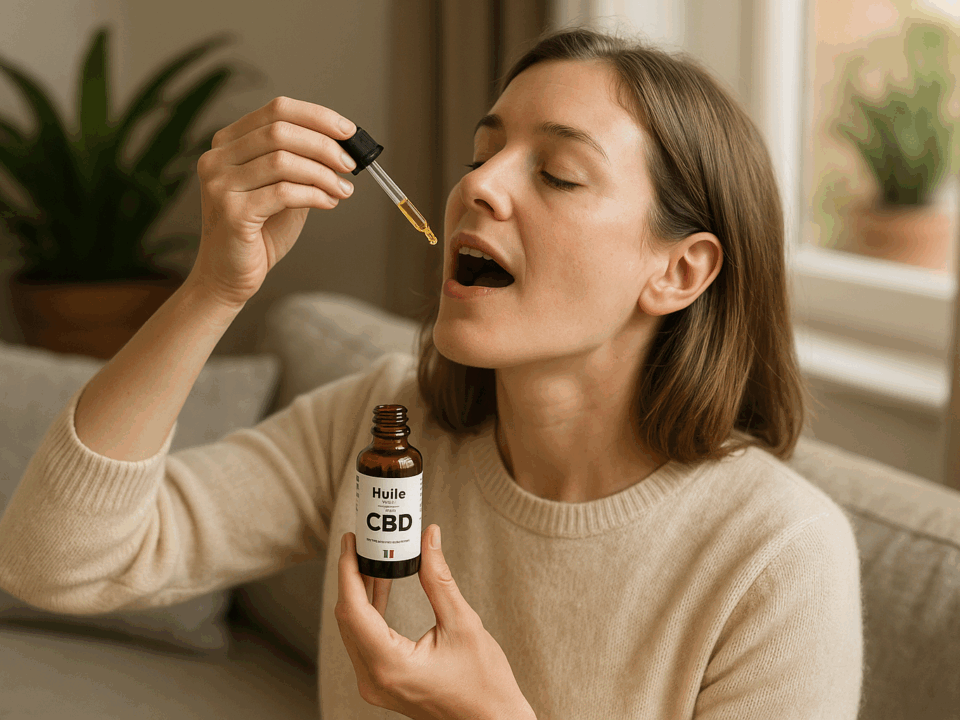
Faced with these symptoms, more and more people are wondering about the potential role of CBD (cannabidiol). Presented as an ally for well-being, CBD is often associated with managing stress, discomfort, or temporary imbalances.
But what about CBD and hangovers?
👉 Can CBD reasonably be considered a remedy after excessive alcohol consumption?
👉 What does science say, and more importantly, where does the official line end?
Understanding hangovers: known biological mechanisms
Contrary to popular belief, a hangover is not simply a case of "lack of sleep." It is a complex set of physiological reactions triggered by alcohol and its metabolites.
1️⃣ Alcohol and acetaldehyde: a problematic duo
When alcohol is consumed, it is rapidly metabolized by the liver. One of its main byproducts isacetaldehyde, a molecule known for its high toxicity.
This compound is involved in several symptoms characteristic of a hangover:
- headaches,
- redness,
- nausea,
- general feeling of discomfort.
The body must mobilize a significant amount of energy to neutralize and then eliminate acetaldehyde, to the detriment of other normal physiological functions.
Scientific source: Zakhari S., Alcohol metabolism and epigenetics changes, Alcohol Research, 2013.
2️⃣ Dehydration and electrolyte deficiencies
Alcohol acts as a powerful diuretic. It promotes the elimination of water but also of essential minerals called electrolytes (sodium, potassium, magnesium).
This water imbalance largely explains:
morning migraines,
dizziness,
feeling weak,
dry mouth and intense fatigue.
Dehydration remains one of the most well-established factors in hangovers today.
Source: Mayo Clinic, Hangovers: causes and symptoms.
3️⃣ Inflammation and oxidative stress
Alcohol consumption is also associated with:
an increase in systemic inflammation,
oxidative stress linked to excessive production of free radicals.
These phenomena contribute to physical pain, aches and pains, and that vague feeling that "the whole body is irritated."
Source: Wu D., Cederbaum A.I., Oxidative stress and alcoholic liver disease, World Journal of Gastroenterology, 2009.
A hangover is therefore not simply the result of a short night's sleep, but rather the result of an overall imbalance in the body. Acetaldehyde toxicity, dehydration, electrolyte loss, inflammation, and oxidative stress all work together, intensely mobilizing the body's recovery capabilities. Understanding these mechanisms allows us to approach hangovers with greater clarity and to consider approaches to supporting well-being without oversimplifying a complex biological phenomenon.

Hangovers: what about CBD?
Faced with these well-identified mechanisms—alcohol toxicity, dehydration, inflammation, and oxidative stress—one question keeps coming up: where does CBD fit into all this?
While cannabidiol cannot be presented as a hangover cure, its benefits lie elsewhere. CBD is currently being studied for its interactions with certain biological systems involved in stress management, inflammation, and the body's internal balance.
This is precisely where the endocannabinoid system, a vast regulatory network present in the human body. Sensitive to alcohol consumption, this system plays a key role in functions that are often disrupted the morning after a night of heavy drinking, such as mood, digestion, and inflammatory response. Understanding this link allows us to approach CBD not as a miracle solution, but as a compound studied for its potential to support well-being, within a strictly regulated and evidence-based framework.
Alcohol and the endocannabinoid system: a fragile balance
The endocannabinoid system (ECS) is now recognized as playing a central role in maintaining physiological balance, also known as homeostasis. Present throughout the body, it is involved in regulating key functions such as mood, stress, appetite, digestion, pain perception, and inflammatory response.
This system is primarily based on:
cannabinoid receptors, particularly CB1 and CB2,
endocannabinoids, molecules produced naturally by the body,
and enzymes responsible for their synthesis and degradation.
However, several scientific studies have shown that alcohol consumption can disrupt the functioning of the endocannabinoid system, even with occasional exposure.
The impact of alcohol on the endocannabinoid system
Studies suggest that alcohol influences endocannabinoid signaling by altering receptor activity and endocannabinoid availability. This disruption may contribute to certain imbalances observed after excessive alcohol consumption, particularly in terms of:
mood (anxiety, irritability),
of the digestive system,
of the inflammatory response.
These effects are particularly interesting to consider in the context of hangovers, whose symptoms partly overlap with the functions regulated by the ECS.
Scientific source:
Basavarajappa B.S., Endocannabinoid system and alcohol abuse disorders, Progress in Neuro-Psychopharmacology & Biological Psychiatry, 2015.https://pubmed.ncbi.nlm.nih.gov/25506754/
CBD: indirect interaction with the endocannabinoid system
CBD (cannabidiol) is one of many cannabinoids naturally present in the hemp plant. Unlike THC, it does not cause any psychotropic effects and does not lead to intoxication.
From a scientific perspective, CBD stands out for its indirect mode of action. It does not bind directly to CB1 and CB2 receptors like THC, but rather acts as a modulator, influencing various biological mechanisms associated with the endocannabinoid system and other signaling pathways.
This indirect interaction explains why CBD is being studied for:
its potential influence on the stress response,
its role in inflammatory processes,
its interaction with certain neurotransmitters, particularly serotonin.
⚠️ It is essential to remember that these effects are based on general scientific research, not studies specific to hangovers.

Why CBD is generating interest in the context of hangovers
While CBD cannot be presented as a solution for hangovers, its theoretical benefit is based on a simple observation: several of the functions regulated by the endocannabinoid system are precisely those that are disrupted after excessive alcohol consumption.
Anxiety about the future, digestive discomfort, general malaise, and emotional fatigue are all symptoms that can be attributed to temporary imbalances in the body. It is in this context that CBD is sometimes considered, not as a treatment, but as a compound studied for its potential role in promoting well-being.
The research discussed in this section provides a better understanding of why CBD is attracting growing interest when it comes to the unpleasant effects of excessive alcohol consumption. Inflammation, digestive discomfort, emotional instability, and general malaise are all biological phenomena studied separately, in which cannabidiol is the subject of serious scientific investigation.
However, it is essential to remember that these data do not allow us to conclude that CBD has a direct effect on hangovers themselves. The effects observed relate to general mechanisms—inflammation, nausea, anxiety—and not to a specific indication linked to alcohol abuse. CBD cannot therefore be considered either as a treatment or as a solution for recovery after a night of heavy drinking.
The interest in CBD in this context is primarily part of a holistic approach to well-being, based on an understanding of physiological balance and sensible consumption. Its potential use is not a substitute for the basic recommendations recognized by health authorities: adequate hydration, rest, a healthy diet, and moderate alcohol consumption.
As research progresses, new data will undoubtedly clarify the role of the endocannabinoid system in transient alcohol-related imbalances. In the meantime, clear, measured, and scientifically sourced information remains the only responsible way to address the link between CBD and hangovers, without excessive promises or scientific shortcuts.